
WNBPA Breaks Through With Major Win Amid CBA Negotiations
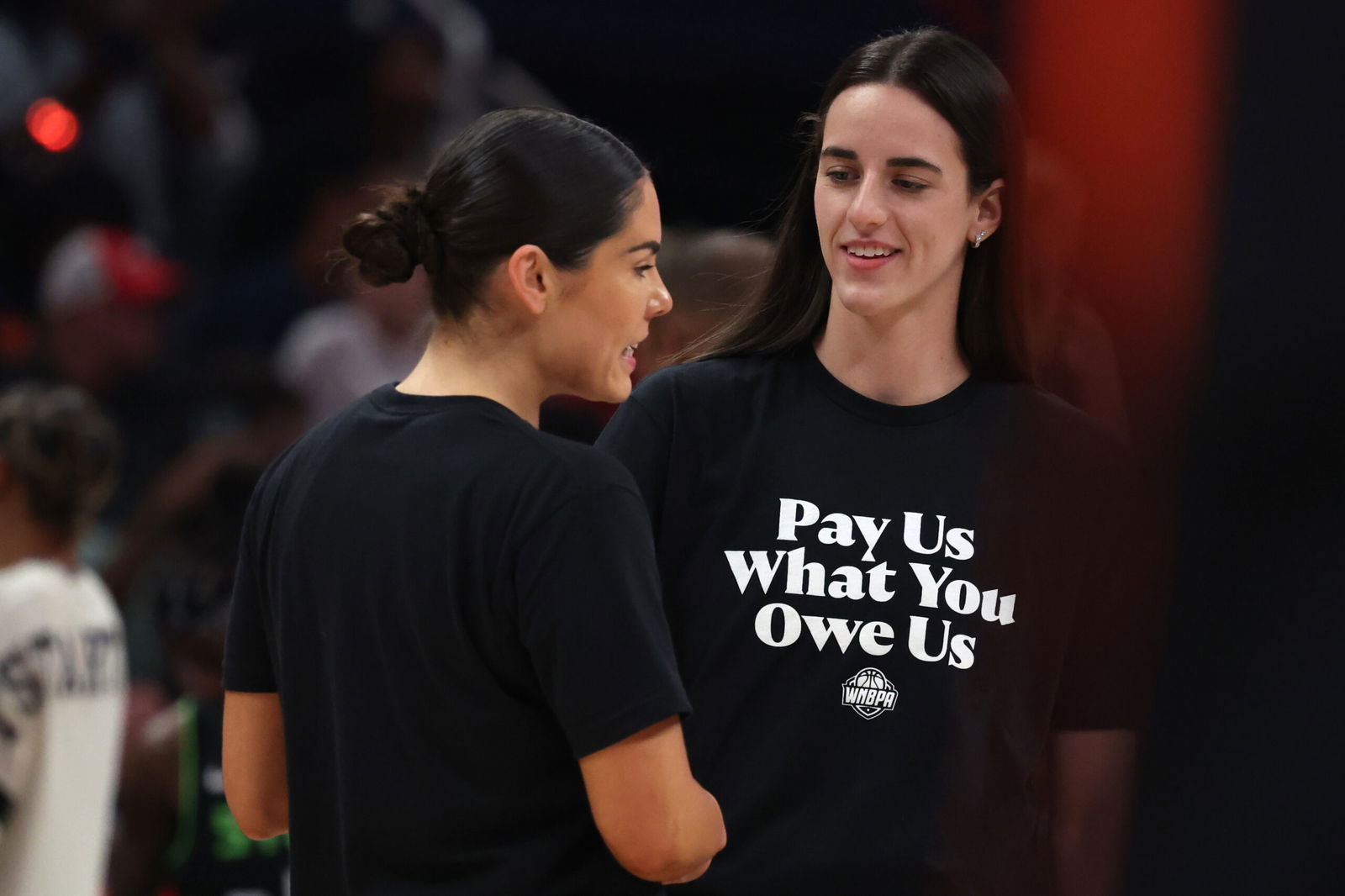
via Imago
Jul 19, 2025; Indianapolis, IN, USA; Team Clark guard Caitlin Clark (22) and Team Collier guard Kelsey Plum (10) before the 2025 WNBA All Star Game at Gainbridge Fieldhouse. Mandatory Credit: Trevor Ruszkowski-Imagn Images
After Monday’s meeting, it’s clear there is still a long way to go before the WNBPA and the league reach common ground on a new CBA. Even so, the players’ union walks away with a big win.
And that win centers on higher salaries. Under the latest proposal, WNBA players could earn $1 million salaries by 2026, a first in league history. This includes a $5 million team salary cap, representing a massive 30% increase.
If implemented, it would create some of the largest contracts ever seen for American women’s professional athletes across any sport. With a 20% max salary structure, individual base salaries could reach $1 million, and additional escalators could push those earnings as high as $1.3 million.
But negotiations aren’t finished yet, which simply means those figures could rise further. Still, revenue sharing remains the biggest sticking point.
While a $5 million cap would lift salaries, the WNBPA has not accepted the offer, as salary growth alone isn’t enough. But…..
Why the WNBPA Is Pushing for More?
The CBA talks have stalled largely because of the league’s proposed revenue-sharing model. The plan defines the salary cap as a percentage of basketball-related income, allowing for growth year over year.
And this framework closely mirrors the NBA’s early model. Notably, between 1984 and 1991, ending with the NBA’s first season on NBC, the league’s salary cap grew by nearly 230%. And this growth rate is similar to what the WNBA’s current proposal would generate.
On paper, the model offers players 50% of net revenue after expenses. But the issue lies in those expenses, as fixed costs such as travel and support staff take up a much larger share of revenue in the WNBA than in the NBA.
Because of that, the WNBPA estimates that the league’s proposal would ultimately give players less than 15% of gross revenue. However, the league argues that increasing player compensation could result in $700 million in operating losses over the life of the new CBA.
And that something players deny. They counter that argument by pointing to upcoming expansion fees. They believe that with teams in Cleveland, Philadelphia, and Detroit expected to join the league by 2030, those fees would help offset projected losses.
So for now, the gap remains wide. Salaries are rising, but revenue sharing will likely decide how and when a deal gets done.
Written by

Yashika Dutta
Edited by

Oajaswini Prabhu