
CBA Standoff Escalates as WNBA Declines to Budge on Key Issues in Latest Proposal
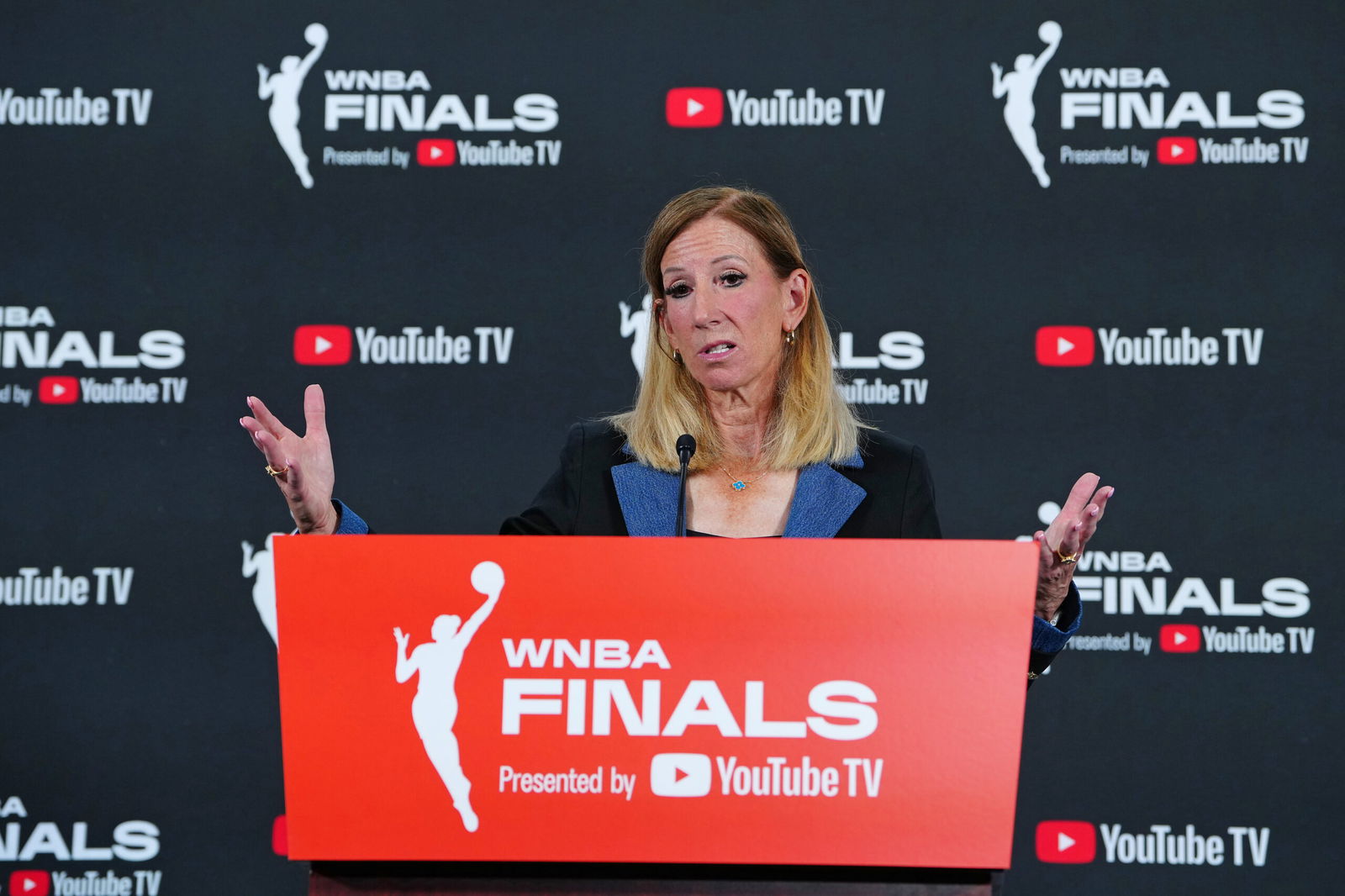
With just days left before the regular season begins, CBA negotiations remain stalled. So the league has made a bold move, acknowledging the urgency. But…was it enough?
According to Front Office Sports, the WNBA sent a counterproposal to the players’ union on Friday night, just three days after the union submitted its latest offer. The quick response was notable. However, the league’s position has largely remained the same.
While the W reportedly made concessions in some areas, there has been no movement on two major issues: the proposed salary cap and revenue sharing. The league is still proposing a $5.65 million salary cap per team.
Under its revenue projections, players would receive no more than 15% of total league revenue during the agreement. Meanwhile, in its February 17 proposal, the WNBPA is seeking a salary cap closer to $9.5 million in year one.
The union is also asking for players to receive 25% of total league revenue initially, averaging 27.5% over the life of the proposed CBA. As per the league, the union’s proposal “unrealistic,” and wouldlead to “hundreds of millions of dollars” in losses. But…
Is the League’s Claim Genuine?
In 2024, reports indicated the WNBA was losing roughly $50 million per year. With that context, the league’s warning about “hundreds of millions” in potential losses may not seem far-fetched. However, the exact financial breakdown behind that claim has not been made public.
At the same time, expansion fees tell another story. The Golden State Valkyries reportedly paid $50 million to join the league. The Toronto Tempo paid $50 million. Portland paid $75 million. Meanwhile, ownership groups in Cleveland, Detroit, and Philadelphia reportedly committed $250 million each. Altogether, that approaches nearly $1 billion in expansion-related investments.
That naturally raises a question: If the league is losing that much money, why are ownership groups willing to pay nine-figure sums to enter? Well, the league maintains that expansion fees do not count as annual operating revenue.
But that’s not it. There’s also the new media rights deal worth roughly $200 million per year for 11 years. If evenly divided across 15 teams, that would amount to about $13.3 million per team annually. And considering the league’s ownership buckets, each team may effectively receive closer to $5–6 million depending on how funds are distributed.
So that detail matters. The league’s proposed salary cap of $5.65 million per team closely mirrors those per-team media distributions. Meanwhile, players are pushing for $9.5 million.
Complicating matters further is the league’s ownership structure. Well, the W’s not set up like a traditional league. Approximately 42% is controlled by NBA owners, 42% by WNBA team owners, and 16% by outside investors from a 2022 capital raise. And that structure affects how revenue is allocated.
But, this situation feels familiar to that of the NBA. Notably, in 1983, only seven of 23 NBA teams were profitable. Yet players negotiated a deal that granted them 53% of basketball-related income. The league eventually grew into a global powerhouse. So the history shows that leagues can lose money early while still increasing in long-term value.
So what do you think? Who’s right in this standoff?
Follow She Got Game for more updates!
Written by

Yashika Dutta
Edited by

Joyita Das